Friday, January 22, 2016

New series: The Tenement Puzzle, a social, cultural, economic and architectural history

Why are some tenements -- built in the ghetto for poor, immigrant labor -- so elaborate, covered with expensive terra cotta and glazes, stone and tinted brick while others are simple and plain?

Over the years I've heard several speculative explanations, often ingenious, but always wrong, always misled by a simple deception of the streetscape. Unlike an archeological site arranged in chronological layers each earlier than the one above, the street shuffles the history together in one jumble. Each style of tenement belongs to a structure of a particular moment in the city, not to its neighbor on the street.

Why is the city streetscape so varied with big and small, plain and ornate, dull and colorful? Why are some old neighborhoods lined with narrow buildings, others with only expansive, stately buildings? Why are corner buildings in those narrow-lined neighborhoods typically more grandiose than the midblock buildings?

The real estate of New York is a direct reflection of the social and economic growth of the city, including the government and cultural ideological response to that growth. Unlike any other aspect of the history of New York, the architectural history is in plain view -- if you can read it. This series intends to show how to read it, and to show where the documentary record misleads: the only way to read the history is through experiencing the history itself, and the buildings are that faithful historical remnant. Architecture does not lie -- it's history presented in brick and stone. The subtext of this series is "don't believe everything you read." Look -- with informed eyes.

I'll start with two speculations about why some tenements look so lavish. one, landlords looking for better tenants; the other, landlords accommodating illiterate tenants. The actuality reveals a much deeper cultural relation between rich and poor.

Thursday, January 21, 2016

Cooptation of the Left and the permanent shadow government at the local level

Underneath the community boards' rejection of de Blasio's zoning proposals lies a practical and familiar issue: money. Bloomberg's 120 rezonings each went through the arduous public process in which community boards -- and crucially its members -- played an important role. De Blasio's proposals bypass the community level by writing the upzoning directly into the zoning law (called "the zoning text"). The Blaz's proposals eliminate any local leverage for funds that local community non profits might obtain. 

Affordable housing built by developers to meet zoning requirements must be managed by a non profit community-based organization (CBO). It's part of their mission and they get funding for it. As a result, CBO's are often the most vigorous proponents of development at the local level. Without the market rate development, no affordable housing -- the market-rate housing "subsidises" the "affordable" housing (a deceptive expression -- the housing is often beyond the means of local residents). That's the Inclusionary Zoning/Inclusionary Housing model -- 80% market rate, 20% "affordable." The non profit becomes complicit with gentrification and displacement. 

Displacement is difficult to quantify. Unless a tenant died, the reason for vacating an apartment is anyone's guess, since it's not recorded. Affordable housing is eminently quantifiable, which is one reason why politicians romance it and parade it. Same with CBO's. If  the market-rate housing raises real estate values and landlords evict tenants wholesale, as long as the affordable units are built and occupied, no one will be the wiser even though the net affordable housing in the neighborhood has declined. 

CBO's have a long life in the neighborhood. Their members often sit on the community board. There they often create a consensus of what is "right" for the neighborhood, which too often means colluding with developers to obtain the "affordable" housing the CBO's will manage. 

The political opportunists that cohabit the community boards recognize the going game, and, being political opportunists, play their game. The community board, and underneath the CBO's, are the permanent gov't at the local level. Given that the CBO's are receiving funds to implement the policies that the community boards vote on, the CBO's can also be described as the shadow gov't at the local level.

I'm preparing a talk for Occupy Wall Street Altbank Group about zoning and how gov't coopts the Left through community-based non profits. I want to present this in the context of the amenity dilemma: every material improvement made in a low-income neighborhood attracts wealth and its whiteness, raises real estate values, increases pressure from landlords to evict and yields displacement. Maybe the only solution to the amenity dilemma -- remain in poverty or be displaced to poverty elsewhere; all things accrue to the top -- is protection. So the talk will include a defense of rent regulations, the defense I've made here and elsewhere many times. 

Wednesday, January 20, 2016

Money laundering and affordable housing

The Treasury's decision to investigate money laundering through NYC real estate might actually save New York from wholesale gentrification.

Constructing a lot of new housing can keep rents low by adding supply. Because it's expensive to build, developers prefer constructing luxury housing to get the quickest and highest rate of return. If the wealthy move out of older housing stock or locations further from the city center into these new luxury units, they free up housing for the less wealthy, who decamp from their older and further locations in turn freeing up housing for the even less wealthy and so on down the line. This is the one good reason for de Blasio's Zoning for Quality and Affordability (ZQA) -- allow new units to have higher ceilings to attract the wealthy out of less appealing older models.

But if the luxury housing is being bought by foreign speculators or money launderers who have no intention of living in the apartments, new construction does no good for the housing market. It turns the city's real estate into a non housing market crowding out the housing market. It's a disaster for the resident citizen, especially the low-income and immigrants.

(You might think, well if we eliminated rent regulations, the market would be flooded with vacant apartments, but this is both empirically and theoretically wrong. Most people who would be pushed out of deregulated apartments don't -- and often can't -- leave the local rental pool. They just move to a lower income neighborhood where they create a tighter market and push out lower income tenants who in turn move to lower income neighborhoods evicting people there, again, all the way down the line until at the bottom immigrants huddle up in substandard housing crowded together in dangerous conditions. At the top, landlords renovate the vacated luxury units and hike the rents there. Iow, deregulation doesn't free up the market, it's just a game of musical chairs, destabilizing everyone and raising rents everywhere. This happened in Boston when rents were deregulated, so we know that it's not just a theoretical speculation-- it's reality.)

The alternative to constructing luxury apartments to ease the housing market is constructing affordable housing. But if the monied are still coming to the city and searching for apartments, the pressure on gentrification in outer boroughs will be greater than the creation of affordable housing can accommodate.

It's easy to show that the current model of affordable housing creation is necessarily inadequate. De Blasio's Mandatory Inclusionary Zoning, for example, would require one affordable apartment for every four luxury unit. But as we know from Occupy and presidential campaigns and memes everywhere, the ratio of the wealthy to the struggling is not four rich folks to each struggler, but more like 1:99, and that's actually generous. 1:999 would be closer to reality. So the current model is beyond inadequate -- it's preposterously inadequate.

So again, the affordable housing model can only work if the luxury housing doesn't become a place for billionaires to park their money. It's got to be housing, not speculation, otherwise the entire geography of the city will be distorted into empty speculation at its center without even a tax base.

Tuesday, January 19, 2016

Artists don't cause gentrification

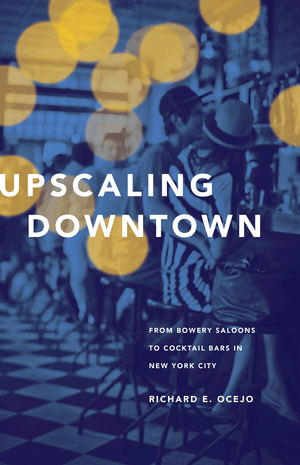
Last year Rich Ocejo published his book Upscaling Downtown, an excellent description of the changing bar scene in and around the Bowery/EV/LES, the nightlife pressure towards commercial gentrification and residential pushback against it. It's an important case history of a neighborhood in transition.
http://press.princeton.edu/titles/10396.html
While it's a great read -- he provides a broad view of the many divisions within the community and it's fun to recognize the many locals he interviewed -- the theoretical background assumptions inherited from the standard academic literature on gentrification occasionally undermine the specificity of the case history. This is not Ocejo's fault; it's the failure of the academic theorists.

It's assumed that because gentrified neighborhoods are preceded by artists and other marginal white misfits, that their presence causes gentrification. But if you look at the facts of history, you find a different and more complex story. When artists and marginals arrived in both the Bowery and the Lower East Side (including what's now called the East Village and Alphabet City), the neighborhoods continued to decline. The artists and misfits did not attract money or commerce. They attracted more misfits and artists.

To blame artists and marginals (Vietnam veterans, the homeless, substance abusers, prostitutes, ex cons, the chronically unemployed, lost youth) for gentrification on the grounds of having preceded gentrification is like blaming the rain on dry streets because dry streets precede rain. The academic theorists have invented a mechanism employing the classic fallacies -- confusing correlation with causation and post hoc ergo propter hoc. In their desperate search for a grandiose theory that will explain all instances, they've drawn hasty, blanket conclusions without looking carefully enough at the details and specificity of the context.

Unfortunately for the big theory, the Bowery attracted misfits for two centuries without seeing any gentrification. For most of those two centuries, it declined right up to 2005 with not a hint of gentrification. What changed the Bowery was city planning, in particular, the Chrystie Avalon complex. Not artists, not misfits, not wayward white youth slumming. City Planning: government.

The theory of gentrification comes to us from classical Marxism, a pre macro-economic theory. It attributes all to market forces and none to government intervention. It's certainly true that the accumulation of capital in excess of any market demand for productivity could be a pressure towards gentrification. But the avenues of speculation depend on what government incentivizes. Buying luxury apartments on Central Park South is the current means. But the gentrification of the LES did not begin with big capital. It started with small time investors. Big capital didn't want to take a chance on a crime-ridden, marginal neighborhood full of weirdos and resistant anarchists.
.....
The assumption has been that whiteness itself attracts money. So Ocejo calls whites who moved to Alphabet City in the mid to late 1970's "early gentrifiers," although for years they watched as their streets continued to decline replacing older residents with shooting galleries (for heroin users), drug dealers replacing families with growing children. More complicating, while these streets declined and buildings were abandoned, burned and the remnants demolished, other parts of the neighborhood were gentrifying. The early marginals and artists did not contribute to it. On the contrary, most of them had to be displaced in order for gentrification to spread. What drew gentrifiers to those parts of the neighborhood were their amenities -- a park view or in the case of Christodora House, spectacular panoramic views. Again, not artists, nor the artistic scene.

If you look through the NYTimes archive, you'll find stories from the Bowery 1880's, the years when it began its steep decline, stories about the death of a resident who lived as a pauper but was escaping from his wealthy family. The millionaire living like a pauper-in-rags is not an urban myth. These people lived on the Bowery and in neighborhoods like the LES. To call them early gentrifiers indicates that the theory has gone astray. The notion is incoherent -- it provides no principled distinction between white people who draw money and white people who repel it -- and it's falsified by history.

Again, contrary to Neil Smith's theory, the neighborhood did not decline in order for developers to buy them cheap, nor is there a universal cyclic law of neighborhood decline followed by redevelopment. The LES declined because it was abandoned by labor when public transit made it possible for labor to leave. It's not a grand conspiracy or a cycle of capital disinvestment. A neighborhood with money need never decline -- investors renovate the housing stock or redevelop it. Contrary to Smith, landlords don't seek disinvestment, although government does -- to create ghettos in a program of segregating races by "providing" affordable housing through the market. Here Smith is particularly incoherent: he sees renovation as a means of gentrification only after the neighborhood reaches rock bottom. He forgets that renovation was always an option.

The underpinnings of gentrification theory are constructed for the convenience of broad theories that ignore the specificity of place and the serendipity of technological, political, cultural and legal transformations. The most effective law of urban development is the law of unintended consequences. A close second is government.

Saturday, January 16, 2016

The mayor washes his hands on the backs of the homeless

Since de Blasio was voted in -- even before he was inaugurated -- the rich, the conservative and the middle-class comfortable have been more than grousing, more than worrying. They've been warning and predicting with the assurance of a street corner evangelist predicting Armageddon, that he'd bring New York City back to the "bad old days" of muggings and race riots.

Political executive office holders who win on a progressive ticket in this country feel compelled to show the rich, the conservatives and the comfortably middle class that their administration is not bent on destroying the fabric of society, increasing crime or allowing riots in the streets or desecrating their pristine neighborhoods.

Its a familiar story. Progressives overcompensate by being more reactionary than the reactionaries. I don't blame this on the progressive politicians. I blame it on the biased, bigoted, comfortable conservatives who complain about everything that doesn't directly benefit them and have zero faith in the potential of anyone but their own kind.

I received an email from the local councilmember passing along a particularly underhanded de Blasio effort to remove the homeless from sight under the guise of having the community "help" Homeless Services "help" the homeless. The administration wants you to identify homeless people on your street who might need "help."

To me this is just a way for the administration to harass the homeless while washing its hands of responsibility for it by blaming the community. The councilmembers no doubt can't push back against such an effort -- if they don't sign on, they look like they don't care about the homeless, and if they do collaborate, they gain the support of those who think the homeless are being helped by this city-wide street sweep of humans, as well as the support of those who just want the homeless removed from sight at whatever cost.

De Blasio already removed the homeless around the 9th Street walkway through Tompkins Square Park. Now it's getting anonymous residents to do the dirty work of fingering a homeless person so the administration can get credit for cleaning up the streets as well as "helping" the homeless.

In any institution or organization, those most vulnerable get pushed around. Denigrating them is often the license for the poor treatment. The homeless are the most vulnerable and the most easily denigrated. And out of sight, out of mind.

Friday, January 15, 2016

Authenticity in the East Village

I was also asked at the Columbia Urban Planning class to comment on the East Village as a semiotic neighborhood -- a neighborhood representing its image to attract clients, both residential and commercial. The circumstances in the EV couldn't be more different from those in Chinatown.

The East Village was once an ethnic enclave -- actually several ethnic enclaves interwoven together: Polish, Ukrainian, Italian, Jewish, Puerto Rican and American-born Black ethnicities each had staked out their blocks, streets and buildings. Today it is a typically gentrified and much more homogeneous neighborhood. Its commerce caters to a different quantity of disposable money and, equally important, a different quality of money. 

Old ethnic shops are one-by-one being evicted as their long-term leases come due. The greater quantity of money available in the neighborhood drives up rents, but it's really the quality of the money that makes the difference. If the local hipster were willing to pay a high price for, say, authentic pierogies, the pierogy shop could jack up its price to pay a higher rent. But the hipster search for authenticity is compromised by the search for the new and discriminating that traditional pierogies can't supply. Vegan gluten-free wasabi peirogies are not within the range of the traditional. The quality of the money -- the kinds of purchases its possessor is interested in paying for -- determines the profile of the street commerce.

Hipsters prefer new commerce run by fellow hipsters -- or at least fellow middle-class young and attractive whites. Rich Ocejo pointed out to me the interest among hipsters in the authentic barbershop experience. But the old barber on Ave. C run by a 74-year-old Puerto Rican is way too authentic. Instead the barber has to be himself a hipster, preferably not hipper than the client, and comfortably downscale to provide just enough of a sniff of slumming "authenticity." 

Hipsterism has changed over time, becoming increasingly conformist, fashion-conscious, semiotic and commercialized. If you've read so far in these last few posts, you've got the point that the semiotic -- the use of objects to convey a cultural meaning -- because it is a form of communication, opens the door to deception. Utilitarian dress cannot deceive in itself. A hardhat worn by a construction worker at the worksite has a direct relation to its function. There's no room for deception. It's worn to protect from falling objects. To the extent that clothing is non utilitarian, it is available for communication as fashion. So rolled up jeans have no function but to identify a strain of hipsterism -- at the current moment. Similarly, the lumbersexual beard borrows the image of masculinity transferring it to fashion, contrary to the meaning of its raw, unshaven masculinity in which fashion purports to play no role. 

The constant search for authentic signs and the removal of the authenticity by recreating those signs as fashion is a characteristic of current hipsterism. It is not benign. Look at the ad at the top. Both men are conversing across the generations sitting on a shoeshine bench. The significance to the older generation man in the three-piece suit lives in a structure of meanings that belong to an old racist culture that assumed white superiority when black men served at the white man's foot. The significance for the hipster is merely a kind of play with fashion. 

And so fifty years of civil rights' struggle is effaced, erased, lost, dismissed and mocked, all in the interest of commerce, fashion and the search for distinctive identity (really just the new hipster conformism).

The ethnic, political, and artistic history of the East Village has similarly been effaced, erased, lost, dismissed and mocked. But where Chinatown is endangered by inauthentic representations of its ethnic economic base, the East Village is recreating its own new authentic economy -- the authentic search for the retro, the fashionable, the distinctive, the slumming of elitism coupled with its upscale revision of it, the clean, expensive hipster slum with great, exotic dining and deserts and diverse nightlife drinking options. It is sustainable because the hipster has sufficient disposable money to sustain it. The sole threat is the landlord who demands commercial rents above what commerce can afford. 

It's difficult to describe the restructuring of meaning in hipsterism as deceptive. There's no authenticity to deceive beyond the desire to identify through consumption and display.

See also in this series:
Semiotic neighborhoods vs the authentic and anti-fragile: prestige and its deceptions and betrayals
Prestige and distortion in Chinatown
Suits and betrayal in Chinatown
The Mobility Dilemma and the Clearinghouse Effect

Thursday, January 14, 2016

The MobilityDilemma and the Clearing House Effect

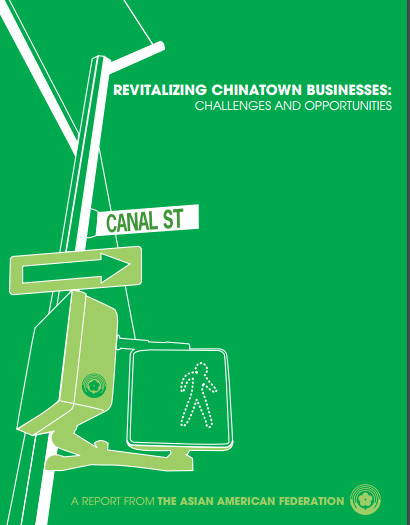
The Asian American Federation, the group that studied Chinatown businesses I mentioned a couple of posts ago, also studied Asian poverty in New York City. Their policy recommendations point up what you might call the mobility dilemma: efforts to increase upward mobility run the risk of displacing their target populations. Here is one of their policy recommendations:

Economic development efforts in enclave economies that encourage a diversified, vibrant business community rather than a hypercompetitive, low-margin, narrow economy would help stabilize the local economy and raise wages and labor standards. 

By "diversified" they mean non local serving businesses: semiotic, outward-looking commerce -- in a word, tourism. To upscale a local-serving produce stand into a high-end restaurant -- necessarily non-local serving since the locals cannot afford it -- will allow, if successful, higher wages for the waiters (if the manager doesn't steal the tips, a wide-spread practice as I've mentioned). But it also crowds out local-serving commerce and attracts more upscale outward-looking commerce. As prices and profits rise, so do real estate values. Soon the neighborhood is in demand from outside and landlord pressure to harass and evict locals increases. Gentrification displaces the local community.

The dilemma is parallel to the urban amenity dilemma: every material improvement in a low-income neighborhood attracts investment that eventually gentrifies and displaces the low-income community. The two horns of the dilemma both seem unacceptable: remain in poverty or be displaced to poverty elsewhere.

The AAF policy recommendation seems to ignore the historical clearing house dynamic of Chinatown. Immigrants arrive there, work hard for several years, spend frugally, save resolutely, then leave for a prettier neighborhood. Upscaling Chinatown may provide higher wages for a few, but it eliminates it as a first destination for new immigrants.

New immigrants most need work they can assume immediately and housing that is extremely cheap so they can both earn and save. AAF concludes that "Making affordable housing more available is critical to alleviating poverty." But current affordable housing programs are all geared towards permanent housing, too expensive for the needs of new immigrants. Only transient housing meets the demand in an immigrant first destination. Permanence is unnecessary and too expensive.

Chinatown today is divided between two communities, one immigrant and transient, another American-born and permanent. Current affordable housing models would change Chinatown into all permanent, but the mobility it provides for the low-income immigrant is not upward, but outward, so the problem is not solved, in Engels' famous words in The Housing Question, "they are merely shifted elsewhere."
See also in this series:
Semiotic neighborhoods vs the authentic and anti-fragile: prestige and its deceptions and betrayals
Prestige and distortion in Chinatown
Suits and betrayal in Chinatown
Authenticity in the East Village

Wednesday, January 13, 2016

Suits and betrayal in Chinatown

"It's so hurtful, it's just wrong!" said a Chinatown community "leader" to another Chinatown non profit director. They exchange mutual gestures of dismay.

Were they deploring restaurant management stealing hard-working waiters' tips? Complaining about a landlord allowing illegal conditions in his building so he could call the Dept of Buildings and evict all the renters overnight without any due process? Or the proposed legislation to exact punishing fines on street vendors for setting up in an illegal space instead of merely having the police ask them to move?

None of those moral crimes. They were deploring a labor organization calling a councilmember "racist." That's what upsets the suits in Chinatown.

White collar crime doesn't receive this kind of shock and dismay. A restaurant manager, donning a suit of clean and pristine pride for a photo op, stands next to a councilmember also in a suit, endorsed by the legitimacy of politics, governance and "leadership." They each lend the other its public display of respectability, shaking hands. Owning and controlling, they have nothing to complain or howl about, nothing ugly to say, nothing to taint the picture, nothing but smiles. And all the suits around are pleased.

But stealing tips -- stealing from low-wage workers who have no alternatives -- is nothing to smile about. It's vastly worse than calling a councilmember "racist."

The suit, like the semiotic neighborhood, is all about selling itself and selling out. It prides itself on its success at whoring itself, as if this were the only game worth playing.

There is no recognition among the respectable that labor stands at the bottom of the social scale, with little support, funding or clout. They have their voices and their unity, and that's just about all. To be heard, they've got to be more than loud in quantity of decibells. They've got to be loud in quality -- shocking, offensive, disturbing and disruptive, otherwise they are invisible. The cry of "racist!" whether true or not, is an honest, sincere, genuine and authentic cry about true management abuses and real living needs.

Forgive me for ranting on this, but I'm disgusted -- and I want those leaders to know that I'm disgusted -- by such displays of shock and dismay over labor tactics. In your comfortable easy chair, imagine yourself lying on the third level of a bunk bed, your only living room. Then imagine who respects your voice. Then, when you next hear "racist" yelled by labor, maybe, true or not, you'll cheer them for simply being heard.

Suits purport to be smart; suits purport to be educated. Then suits should know well the deep disparities of this world and should expect labor tactics to be loud and ugly. Here's how the game is played, and everyone knows it: power, in its echo chamber, will not listen to the disempowered unless the disempowered offend them. Then power deplores the disempowered for being offensive. I have no respect for anyone who deplores labor tactics.

I don't practice labor tactics -- I don't have the courage for it. But I recognize that, truthful or not, it gets justice. There would never have been a Chinatown Working Group were it not for the protests of Chinatown labor which included a lot of name-calling.

It's a shame, though no surprise, that in this upside-down and morally corrupt world, justice should have to be pitted against truth. But truth is merely information; justice is lived. Justice first, then truth will arrive in time. Without justice, truth will remain dressed in suits.

See also in this series:
Semiotic neighborhoods vs the authentic and anti-fragile: prestige and its deceptions and betrayals
Prestige and distortion in Chinatown
The Mobility Dilemma and the Clearinghouse Effect
Authenticity in the East Village

Tuesday, January 12, 2016

Prestige and distortion within Chinatown

The Asian American Federation, a social services and research non profit highly regarded within Chinatown, published a study of Chinatown in 2008 in which they found that East Broadway, the center of recent Fujianese immigration and a low-income area, was one of the most resilient, vibrant and successful parts of Chinatown, while much of the rest of the neighborhood was ailing commercially. Yet the study's recommendations completely disregard its findings of fact. Their recommendations all favor tourism with no recommendations that support the ethnic community.

Most telling are the recommendation that waiters learn more English (useless for local-serving restaurants), and the absence of any recommendation that managers stop stealing waiters' tips, a wide-spread practice among restaurant owners in Chinatown. Stealing tips removes the most easily available incentive reward for waiters to improve services like learning English. Without tips for improved service, AAF's recommendation burdens the waiter entirely. The bias in favor of management is evident: compel the waiter to learn English but still take his tips. There isn't even a recommendation for free or supported English lessons.

The power of prestige and respectability is pervasive. Growth is viewed as outward-looking towards an upscale mainstream culture, not expanding and supporting the base. So, for example, here are their findings of fact:

A number of changes in the mix of residents in Chinatown also has altered the customer base for Chinatown businesses. Over the past 20 years, growth of the Fujianese population in Chinatown, due to new immigration patterns, has generated demand for businesses supporting their food, entertainment and service preferences. Newer Fujianese-owned businesses have sprung up along East Broadway.... A lack of nightlife in Chinatown also makes it difficult for restaurants to attract evening business, and garment-industry job losses and relocations have reduced restaurants’ traditional customer base. However, restaurants catering to Chinatown’s growing Fujianese population report brisk business.... The decline in the garment industry has decreased measurably the daytime population in Chinatown, a key component of the traditional customer base.  As this traditional customer base shrinks, the growth in Chinatown’s Fujianese population and the influx of non-Chinese and some returning Chinese immigrants and retirees have created a demand for products and services catering to these markets. 
 And their conclusions:
A general lack of customer service reduces the appeal of shopping and dining in Chinatown. Limited English capabilities of staff make it challenging for people who do not speak Chinese to patronize Chinatown businesses. Gruff service from a few businesses hurts the image of all Chinatown establishments. Many stores and restaurants operate on a cash basis, which discourages those customers
 The customers mentioned are tourists with credit cards, not local recent immigrants. And "image" is a problem looking to outsiders, not to locals. The sole source for this claim of gruff service and bad image comes from the Zagat Guide -- a restaurant guide published in English for English-speaking customers. There is no Mandarin, Fujianese or  Cantonese Zagat for New York. If you look through all their recommendations, you'll see that they are equally outward, not inward, looking. And this is characteristic of many such studies of Chinatown. Whether they are positioning Chinatown non profits to obtain government funding for development or attracting private sector investment, they ignore the economic base and their recommendations threaten them with unstable, fragile commercial gentrification.

Image and money are tied together. Semiotic neighborhoods pretend with an image for sale, much as a suit allows its wearer to pretend to an image of respectability. The base of the economy is disregarded, dismissed and invisible.

Next: semiotics and deception among the suits in Chinatown, and the struggle up from the bottom.

See also in this series:
Semiotic neighborhoods vs the authentic and anti-fragile: prestige and its deceptions and betrayals
Suits and betrayal in Chinatown
The Mobility Dilemma and the Clearinghouse Effect
Authenticity in the East Village

Monday, January 11, 2016

Semiotic neighborhoods vs the authentic and antifragile: prestige and its deceptions and betrayals

(These remarks elaborate an informal presentation I gave as guest speaker at a Columbia University Urban Planning Master's Program class last year. I was asked to discuss Chinatown and the East Village as semiotic neighborhoods. The basic idea is that in ethnic enclaves, the commerce that serves local residents is more resilient than touristy commerce. 

Representations designed to broadcast identity for outsiders betray the people and culture that it purports to represent, so there's a correlation between broadcasting outside and economic fragility, as well as deception and betrayal. Authentic commerce, by contrast, doesn't represent and is antifragile -- it grows stronger in a crisis because the locals have more needs in a crisis, and the local commerce serve them. 

Nevertheless, prestige and respectability are measured in mainstream cultural standards, far from ethnicity and authenticity, and are by nature hypocritical -- invested in presenting and maintaining themselves as prestigious, respectable and mainstream, regardless of the real ethical and moral defects of the apparently respectable -- so authority, including many city planners, administrators, financiers, developers and local community opportunists, scorns and ignores the authentic stability of the enclave's economy, endangering the future of the enclave. Although an ethnic enclave can thrive and grow despite outside catastrophes like terrorist attacks, hurricanes and recessions, it is vulnerable and threatened by internal and external authorities seeking to gentrify it. Already gentrified neighborhoods seek representations of authenticity that betray the authentic roots of the neighborhood. They are stabilized by luxury commerce dependent on upscale trends.)

What is a semiotic neighborhood? Simply put, a neighborhood full of signs. Any commercial street will be lined with signs that draw to its consumers. Delancey Street signs draw to the low-income residents nearby. Times Square draws to an international tourism consumer, advertising the entire city -- that's why the signs are so large, so bright, on-the-pulse and sexy. The signs can be read as an indicator of the character of the consumer.

But semiotics of a neighborhood is not just commercial signage. There are no commercial signs on Park Avenue north of 59th Street, but the stone and stately architecture, the spareness and cleanliness of the streetscape, the absence of commerce, all send a message that this is both a residential neighborhood and a wealthy, exclusive one.

Semiotic neighborhoods can be divided among those that broadcast their signs outside the neighborhood, and those that look inward. Broadcasting neighborhoods use their signs to create an identity for outsiders, an identity they can easily read. It can be a bit of a contradiction: an ethnic neighborhood can broadcast an identity that belongs to the outsiders -- self-stereotyping -- instead of being authentically ethnic. The purpose of the identity after all is not to be authentic, but to draw customers. So notice that it's money that leads to the fakery and the fakery is a betrayal of its own.

Inward-looking neighborhoods have no such need to create such an identity. They are not pretending with a show of what they are. The commerce there simply serves the local community that already understands it for what it is -- theirs. Inward-looking neighborhoods are characterized by authenticity.

In the literature of semiotic neighborhoods, inwardly looking neighborhoods are not even considered as semiotic -- they don't try to speak to the general public or communicate using the broader language of the culture, the recognized stereotypes; the motivation of their signs are restricted to the needs of locals, with no thought of trying to impress anyone with an enhanced identity. Ironically, they have authentic identity -- because they're not trying.

Local-serving commerce has low costs, since the customers don't have to be enticed and brought to the door. The locals are a bit of a captive market. As long as the prices don't drive the locals to seek a better deal, the local commerce can rely on having its customer. When there's a crisis, even a catastrophe like 9-11 or Hurricane Sandy, the local commerce actually thrives. The local residents have more needs in a crisis, not fewer, and the residents are even more captive without transport. They must find their needs served locally.

While the authentic neighborhood tends to keep prices reasonably affordable (the customer is not entirely captive) broadcasting a neighborhood tends to raise prices. The intent of broadcasting is to surpass the profits available locally, otherwise it would stay local and not bother broadcasting at all, since broadcasting incurs advertising and presentation costs. And advertisement and image-creation must be ongoing to keep up with outside trends.

In a crisis, a semiotic neighborhood can be devastated.This happened in parts of Chinatown after 9-11. Mott Street, which had been outward-looking with antique stores and Chinese souvenir shops, lost many stores, and has only recently recovered.

East Broadway, the center of the recent immigration and lined with local-serving stores, has not been devastated in the wake of 9-11 or even the Great Recession. It's been crowded and bustling, the commerce vital and thriving.

To be continued...
See also in this series:
Prestige and distortion in Chinatown
Suits and betrayal in Chinatown
The Mobility Dilemma and the Clearinghouse Effect
Authenticity in the East Village

Friday, January 08, 2016

Should be interesting:

A rare opportunity to learn the labor perspective in Chinatown. And Peter Kwong is an authority on Chinatown. Sunday, Jan. 10, 3pm, 345 Grand Street at Chinese Staff and Workers Association.

Thursday, January 07, 2016

The consequences of unaccountability

The Parks Department closed the basketball court all summer to resurface it even though there were no complaints about the old court and there was no community need for a resurfaced court. The Community Board did not request a resurfacing. Calling it a "repair," the Department proceeded without consultation, consent, or process.

The Department also renovated the nearest basketball court on Avenue D at the same time, closing out basketball to the community youth for nearly the entire summer.

The placement of ping pong tables in the park was also done without process beyond finding a space. The installation of a police surveillance station: also without process or consultation. Both of these targeted the homeless in Tompkins Square Park who've been part of the park community for decades.

The police station was installed after an article appeared in which a new young white person complained about the homeless in the park. The article appeared in the New York Observer, owned by Donald Trump's son-in-law Jared Kushner, who owns at least 36 buildings in the neighborhood. The homeless are clearly an obstacle to financial appreciation of his holdings and his vision for the neighborhood, one that is cleansed of anything but wealth and whiteness.

The park is the center of the Alphabet City neighborhood and community. It is being transformed without any accountability. I often hear the simplistic analysis that gentrification is the inevitable the result of global capital accumulation seeking a place to develop new markets. But gentrification doesn't happen without government complicity. Parks, development, real estate taxes, zoning restrictions, housing availability and regulation, services -- all these are within government purview. Gentrification is as much a policy choice as a pressure from capital.

The government in a democracy purports to be us. But when a government agency -- whether it's Parks and Recreation or the NYPD -- or the mayor himself changes the landscape without process, that's where gentrification gets in the door.

Wednesday, January 06, 2016

Marginalizing the Homeless

Last night I attended a town hall on homelessness and homeless services. As would be expected, the local electeds and the city administration spoke mostly about public safety -- they have to appease the local residential voters. Only Gail Brewer, the Borough President, addressed her comments to the needs, rights and interests of the homeless themselves. Props to her.

In the Q&A, a couple of middle-aged white men asked pointed, testy questions about public safety. A few graceful senior white women made constructive suggestions on how the homeless could be better served. Not surprisingly, the most trenchant comments were made by the homeless themselves -- several members of Picture the Homeless were present: Why doesn't the city ask the homeless what they need rather than funnel them into the modes convenient to the city. Why solve a housing problem with a policing answer? Why is all the affordable housing in the mayor's housing program way beyond the means of a minimum wage worker?

I complained to the council members present that the Parks Department continues to marginalize the homeless in Tompkins Square Park (Parks last month installed a ping pong table right smack in the middle of the space where the homeless regularly gathered), a public park that has been for many decades a place for the homeless to socialize with their friends, feel at ease and enjoy. They have every right to be there. What they don't have is the political clout to protect their right.

Afterward, a well-intentioned rep from a city agency said to me, giving me her card, "If any of your homeless friends aren't being served, please contact me." IOW, 'help me funnel your friends.' My take-away: the people who've been funneled are the people working for the city.

The city is focused on dragging street people off the street.into shelters. They wanted residents to be complicit in this, distributing to the audience maps for residents to pinpoint places where they could identify "problems" (aka a homeless human that the resident wants to have disappeared into the system). Presumably that gives the police the excuse to forcibly remove the human. Providing homes seems to be way down their list below the level of constituency politicking.

Sunday, September 20, 2015

A march to save Chinatown

I'll be joining a march to protect Chinatown from gentrification and displacement Friday, September 25, 4pm, starting at 227 Cherry Street and marching to City Hall.

If you want to join: 227 Cherry St. is near the FDR Drive on the north side of the Manhattan Bridge; nearest subway station is the F train at East Broadway & Rutgers St. See the map below.

As Chinatown is threatened with luxury development -- the new Extell tower will rise 71 stories -- the mayor has rejected the community's protective plan that reflected 7 years of research, discussion and hard work with nearly 60 local community organizations contributing, including residents, labor, small businesses, social services and advocacy groups.

The Department of City Planning has dismissed the community proposal without any research whatsoever, by its own admission (I asked them point blank at a meeting with them). Instead, DCP has clearly indicated to us that it wishes to develop within Chinatown and around it.

March in solidarity with fellow New Yorkers 
to protect and defend Chinatown 
from gentrification and community displacement:
Friday, September 25, 4pm
227 Cherry Street to City Hall
(227 Cherry St. is near the FDR Drive on the north side of the Manhattan Bridge; nearest subway: F train ​​to East Broadway & Rutgers; see the map below)

​
The march flyer:

Wednesday, August 06, 2014

Franchisee labor win

The NLRB (National Labor Relations Board, the agency that rules on labor issues) has decided that employees of a franchisee can name the corporate franchisor in complaints, strengthening labor's voice and requiring greater responsibility from corporate giants. It should be good for the franchisees as well to have the franchisor taking responsibility for labor relations. It's astonishing that MacDonalds previously had not been accountable for labor violations in their franchise stores.

Tuesday, July 15, 2014

Piketty and immigration

Just finished Piketty's Capital in the 21st Century. His central claim is that the ratio of capital/labor increases as the rate of economic growth decreases because the rate of return for capital remains constant, and, he claims further, the growth rate will decline through the rest of the century as the population rate (the rate, not the absolute population) declines.
He recommends a tax on wealth/capital. But if he's right that the rate of growth will decline ceteris paribus, seems to me his wealth tax is not the only option: opening the borders should slow wealth inequality. Open borders w/naturalization would also counterbalance the political influence of wealth, Piketty's underlying complaint against wealth accumulation.
His tax could happen in Europe, but not likely here in the US. How would a push for immigration fare as a means to grow the economy? With an alliance of business with immigrants? After all, Piketty's prediction is a ratio, not an absolute quantity of wealth or its buying power. r>g holds when g increases, even though the ratio of wealth-income decreases. It would be a win-win for business and immigrants. It should not hurt unions in the long run either, although in the short run it might hurt a lot. 

Friday, June 20, 2014

Rent regulation, Krugman, Yglesias and reality

A couple of years ago, when the city rent regulations were up for renewal, I wrote an analysis for Met Council to rebut Paul Krugman's standard but flawed complaint against rent regulations. In it I supressed a key force in the development market largely because it seemed at the time too pessimistic. But this morning it occured to me that there's much more to be said about it, and it's worth saying, especially now when there's no rent battle.

First to recap: Krugman's column was focused on San Francisco without recognizing -- or perhaps not knowing -- legal and market distinctions between that city and ours crucial to a clear understanding of the market and regulations here.

On his classic liberal economic view of rent regulations, it is assumed that regulations dampen development, suppressing supply so raising rents. It is also assumed that deregulation will push out current residents, increasing the supply of rentals, so lowering market rents. Rent regulations, on this familiar view that Krugman followed, are the cause of the city's housing crunch and the consequent excessively high market rates.

In the Met Council piece, I showed that both of these assumptions are false in New York City. Because they do not apply to new construction, NYC rent regulations do not dampen development. On the contrary, they are one of the very few incentives to develop in this city, rather than just price up existing apartments, a much cheaper option than construction. Deregulation prices up existing rents, so it de-incentivizes construction. So the first assumption is plainly false.

The second assumption is a bit less plain. When tenants are evicted by a rent hike, the tenants typically don't leave the local rental pool. Employment, family or cultural preferences tie them to the locality (for us, the larger metropolitan area). Instead, many move to cheaper neighborhoods, where, especially in a city where the supply is limited, they increase the demand for housing in those neighborhoods, raising rents there and in turn displacing the prior tenants.

The overall effect is one of musical chairs, not surplus. When everyone has found a seat and settled in, the rents should be exactly as high as before. And as long as newcomers arrive, the rents will continue to rise. with no relief to existing tenants.

The economic difference will be an increase in the aggregate funds available for rent as the formerly regulated tenants devote more of their income to rent and those who can afford more rent move up into those deregulated apartments. The increase goes to landlords.

If deregulated tenants have less disposable income as a result, they may contribute less to the consumer economy or contribute more to the workforce. Both are undesireable: the former dampens the economy, the latter, if it's significant, lowers wages in the workforce, which can also dampen the economy and increase inequality.

Both Krugman and Yglesias agree that construction would ease the market. That is certainly true, as far as it goes (and that is as far as I went in the Met Council piece). But this is liberal market utopianism: deregulate and the invisible hand of the market will provide through the balancing of the individual interests of both developers and residents. There is a diminishing return on construction. Once the supply exceeds the demand, construction will end and developers will seek greener pastures. Developers are mobile, so the construction market in NYC depends on the construction market elsewhere. The tight market everywhere serves the rentier.

Worse, NYC, unlike most places in the world, has a well of demand with no visible bottom. Build it and the wealthy will come. Upzoning, Yglesias' solution, brings newly constructed units to NYC but does not ease market rates, it merely upscales the city. Since apartments respond to cultural fetishes, the more new units constructred, the more old neighborhoods become attractive. A city, like any cultural artifact, defines itself by a value structure of differences as well as of uses suited to distinct motivations. The Lower East Side, once a ghetto (explicitly named as such in maps in the 1920's) for industrial labor and a place to avoid as a utilitarian necessity, now attracts urban youth who would find a penthouse in a glass building culturally sterile.

If, in NYC, new luxury rents were set at market rate and then regulated thenceforward, the incentive to construct might not be too much curtailed. But this will yield more luxury constuction, not more affordable housing, nor easing of the rental market.

When New Yorkers complain that the rents are too high, they forget that landlords charge the highest possible rate that tenants are willing (or, at the bottom, can) pay. Rents are "high" because renters (those above the bottom) want to pay (the bottom have to pay). They are at a negotiating disadvantage, since landlords hold multiple options including warehousing, while renters are mere individuals, unorganized.

If Krugman and Yglesias are wrong -- that is, are deregulation of rents or zonings ineffectual -- is there any way to lower rents? Regulating profit margin might work. It has an interesting precedent in city government. (Thanks to Bill Cashman who pointed this case out to me). Abu Dhabi, the owners of the Chrysler Building, pay its land owner, Cooper Union, the assessed real estate tax on the land. As a non profit, Cooper Union pays no tax. So the rent on the land is in effect determined by the city and state. The Rent Stabilization Board also regulates landlord profit, but it doesn't do this individually, and landlords' books are not open.

A simpler answer would be to place all land and buildings into public hands. If the city could extract a reasonable rent from the 1%, they'd easily be able to manage effectively the current NYCHA properties and even build more affordable housing. If renters were allowed to strike, landlords would eventually abandon their buildings and the city would inherit them. Too bad it'll never happen. It's the only sane solution to "the rent is too damn high!"

Wednesday, June 18, 2014

Concerning the history of real estate in the slum

Trying to attribute gentrification to the real estate industry, Neil Smith came up with an analysis that distinguished ground rent from building rent. It's an echo of David Ricardo, whose brilliant analysis of rent distinguished the value of the land from the value it produced in an agricultural economy. Smith's distinction is inventive and imaginative, but maybe not reflective of any economic reality. I think he conflated potential with real. To explain why I think so, I'm going back in time to the roots of slum real estate.

In her Manhattan for Rent (Cornell 1989), Elizabeth Blackmar recounts how Henry Rutgers, in the 18th century, leased out a piece of his land to a contractor, specifying exactly the size of the house the contractor could build. Too small a house might attract poorer tenants, too large might attract boarders, in either case altering the character of the neighborhood for the worse, degrading the value of his land.

In old New York, the gentry leased land to a contractor who would build a structure and rent it out to a single-family tenant. The building owner then extracted the rent on the residential tenant and in turn paid rent on the land to the landowner. Rutgers' specifications recognize that the value of land depends not just on the rent of whatever structure is built on it, but on the value of the land itself. For Ricardo, the value of the land depended on the demand for the best soil for cultivation. In a city, and for Rutgers, it's the demand for the best neighborhood, the cultivation of preferred neighbors.

So far Smith's analysis works well. The value of the land can be discussed independently from the rent of whatever is built on it. What I question is whether the value of the land can differ from the value of the buildings on it or their revenue.

The drawing at the top shows the Five Points neighborhood, lower Manhattan's notorious slum of the mid-19th century. The artist gives the impression of the topsy-turvy discord of the place, a kind of bizarro-New York. Wooden houses are sinking into the ground at different rates, street fights abound, a white gentleman is kicking a woman, presumably a prostitute, into the street while the only dignified character is the black gentleman in a top hat. Prominent among the incongruities is a tenement building, standing like a Trump Tower amidst a tattered Detroit street.

Here's a photo of the same street taken probably a few years later. You can see that the shack next to the tenement has sunk even deeper. In the drawing it's a two story structure, but the photo shows the ground floor window below the street level.


Charles Dickens had visited this very corner only seven years prior. He complains about the knee-high garbage in the gutter, and that's actually how this photo can be dated. The streets of Five Points were so filthy the city decided to "scrape" them clean in 1855. The story goes an Irish immigrant commented on seeing the newly washed streets of her neighborhood, "I had no idea there was cobblestones down there."

The cleaning of the foulest quarter of New York must have been quite the news. Five Points was not just the city's troubling social problem -- no one had ever seen such poverty, density or desperation in the city before, not to mention the concentration of Catholicism -- the place had also become a curiosity, a circus-like attraction. This photo was the instagram of its day -- The streets of Five Points have been cleaned?!? Definitely got to check that out and record it! -- and here it is, Five Points recorded ironically at its only clean moment, no doubt misleading many viewers today to think "It wasn't as bad as the literary accounts of it." Among the misled may be the viewers of Scorcese's Gangs of New York which reproduces dusty but barren streets, very much like the one in the photo. Here's what the streets of Five Points normally looked like:

Easier to see with this photo of a nearby East Side street lined with ca.1865 tenements, taken prior to 1894 when Colonel Waring finally got the streets of New York clean:

Not pretty. Dickens' complaint was no literary exaggeration. (Btw, if you look at photos of NYC streets in the late 1890's, you'll typically see cute little piles of horse shit here and there. They don't indicate that the streets weren't clean effectively. They're actually the mark of Waring's success. Priorly, you couldn't tell the horse shit from the heaps of excrement of all types, as above.)

Now take a close look at the tenement in the Five Points photo and drawing, in particular, what's behind the tenement in its lot. There's a back tenement -- a smaller tenement behind the main building. That little building tells all. I'll say a lot more about the reason for and the structure of the back tenement, but for now, let's just consider the mere fact that it's there.

In his contract, Rutgers also specified that there be no back house in his lot. A back house was guarenteed to bring a bad element. Who would rent in a back lot? Who would live in a front building with no back yard?

The mere existece of that back house says unambguoulsy that the landowner has lost faith in the neighborhood as a place where he would ever consider living in. He's abandoned its use to the exchange value of its building. That shift will send both the land and its building floating onto the current of exchange, of industrialization and immigration, and eventually to legislative reform.

And that's why it's so tall. At a time when the tallest townhouse was was three and a half stories, these tenements were the skyscrapers of its day. People of means spurned apartment buildings. Multiple dwellings -- they called them tenements, but they were just apartment buildings -- were for immigrant Catholics, not for dignified society. The decent lived in a house.

And it wasn't the tallest. But I will finish this story later. The real estate market, immigration, density, the lack of public transport, and most important, the owners' relationship with his land -- all influence the character of construction and of neighborhood. It's a story of an inverse relation between use value and exchange value that characterizes slum real estate, exactly the opposite of the non slum market where use and exchange and demand all rise together. In the slum, demand and exchange rise at the expense of use. The more demand, the higher the price, the worse the conditions and the greater the density. It explains the uniformity of the slum and its diversity over time. More soon.

Tuesday, June 17, 2014

CB3

Went to CB3 last night. The liquor licensing committee seems to have improved its method of operations. The agenda indicated the time each item would be presented.

I didn't stay around to observe the action. The Distrcit Manager, as always, insulted me in her usual manner by telling me to get out of the way while I am actually not in her way as she walks right passed me with plenty of space to spare. She does this to me every time I attend a meeting, even though I never block an entry. Stupidly, I fell into the trap of responding to her incivility with my own, which, of course, doesn't do any good but just makes everything worse. I left feeling angry at her, angry at myself for being unpleasant to someone in her own workplace on her work time, and full of the frustration of having to want to justify myself yet still not being able to understand why she can't be civil and why I don't know how to let it roll off my back.

Of all the places I find myself, the Community Board 3 is without doubt the most unpleasant. The things that people have done there to me, the things that I have done there -- it's just a hellhole that somehow brings out the worst of human nature. At CUNY, where I'm teaching, the department is welcoming, considerate and fun, the students, despite all the pressures on them, are with few exceptions wonderful to be around, all the employees, from security to custodial staff, all charming to a fault, even the administration is at least pleasant and cooperative. Everyone seems to make an effort to please. Why is the community board so unpleasant?

Going to Community Board 3 reminds me of encountering the body builders who worked out on the chin-up bar in the park twenty years ago. They couldn't talk to you without telling you what to do, how to do it, that you're doing it wrong because you're not doing it their way, even though they weren't paying any attention at all to what you were doing, and what they were doing was limited at best. That's the community board in a nutshell.

Sunday, June 15, 2014