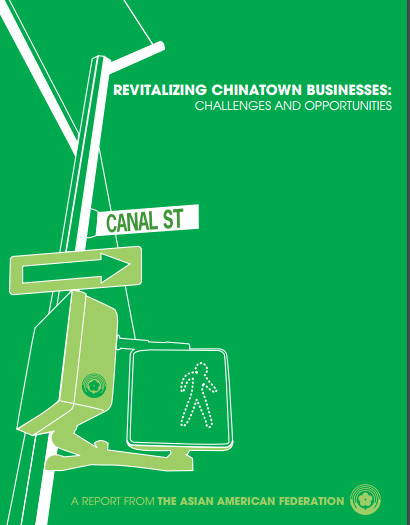
 Most telling are the recommendation that waiters learn more English (useless for local-serving restaurants), and the absence of any recommendation that managers stop stealing waiters' tips, a wide-spread practice among restaurant owners in Chinatown. Stealing tips removes the most easily available incentive reward for waiters to improve services like learning English. Without tips for improved service, AAF's recommendation burdens the waiter entirely. The bias in favor of management is evident: compel the waiter to learn English but still take his tips. There isn't even a recommendation for free or supported English lessons.
The power of prestige and respectability is pervasive. Growth is viewed as outward-looking towards an upscale mainstream culture, not expanding and supporting the base. So, for example, here are their findings of fact:
A number of changes in the mix of residents in Chinatown also has altered the customer base for Chinatown businesses. Over the past 20 years, growth of the Fujianese population in Chinatown, due to new immigration patterns, has generated demand for businesses supporting their food, entertainment and service preferences. Newer Fujianese-owned businesses have sprung up along East Broadway.... A lack of nightlife in Chinatown also makes it difficult for restaurants to attract evening business, and garment-industry job losses and relocations have reduced restaurants’ traditional customer base. However, restaurants catering to Chinatown’s growing Fujianese population report brisk business.... The decline in the garment industry has decreased measurably the daytime population in Chinatown, a key component of the traditional customer base. As this traditional customer base shrinks, the growth in Chinatown’s Fujianese population and the influx of non-Chinese and some returning Chinese immigrants and retirees have created a demand for products and services catering to these markets.And their conclusions:
A general lack of customer service reduces the appeal of shopping and dining in Chinatown. Limited English capabilities of staff make it challenging for people who do not speak Chinese to patronize Chinatown businesses. Gruff service from a few businesses hurts the image of all Chinatown establishments. Many stores and restaurants operate on a cash basis, which discourages those customersThe customers mentioned are tourists with credit cards, not local recent immigrants. And "image" is a problem looking to outsiders, not to locals. The sole source for this claim of gruff service and bad image comes from the Zagat Guide -- a restaurant guide published in English for English-speaking customers. There is no Mandarin, Fujianese or Cantonese Zagat for New York. If you look through all their recommendations, you'll see that they are equally outward, not inward, looking. And this is characteristic of many such studies of Chinatown. Whether they are positioning Chinatown non profits to obtain government funding for development or attracting private sector investment, they ignore the economic base and their recommendations threaten them with unstable, fragile commercial gentrification.
Image and money are tied together. Semiotic neighborhoods pretend with an image for sale, much as a suit allows its wearer to pretend to an image of respectability. The base of the economy is disregarded, dismissed and invisible.
Next: semiotics and deception among the suits in Chinatown, and the struggle up from the bottom.
See also in this series:
Semiotic neighborhoods vs the authentic and anti-fragile: prestige and its deceptions and betrayals
Suits and betrayal in Chinatown
The Mobility Dilemma and the Clearinghouse Effect
Authenticity in the East Village


 Posts
Posts


